Sprockets

Our Products

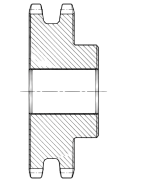
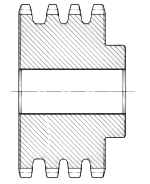
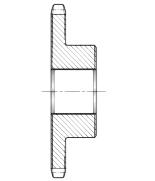
AniGears industrial sprocket - simplex, duplex and triplex
Sprockets

Industrial Sprockets for Heavy-Duty Power Transmission

AniGears manufactures industrial sprockets for chain-driven power transmission systems used across steel plants, cement plants, power plants, mining operations and material handling lines. Sprockets are produced in simplex, duplex and triplex configurations, and every sprocket can be built to a customer's drawing, an existing sample, or a specific chain and application requirement.

If you already work with AniGears couplings or our Ani-Flex Taper-Lock V-Pulley, sprockets fit into the same power transmission line. A gearbox output shaft might run through a coupling, drive a pulley for one section of a machine, and drive a chain and sprocket set for another. We build all three, which means fewer suppliers to coordinate when a project has mixed drive requirements.

A sprocket is a toothed wheel that engages a roller chain to transmit rotary motion and torque from one shaft to another. Unlike a gear, which meshes directly with another gear, a sprocket works through a chain, so the driving and driven shafts don't need to sit right next to each other. That single difference is why sprockets show up everywhere in conveyor systems, bucket elevators, crushers and material handling equipment, anywhere a chain drive makes more sense than a direct gear mesh or a belt.

We manufacture sprockets according to customer drawings, samples, chain specifications and stated application requirements. If you send us the details of the chain you're running and the load you're putting through it, we can tell you what we need to build a matching sprocket.

Get a Quote Download Catalogue
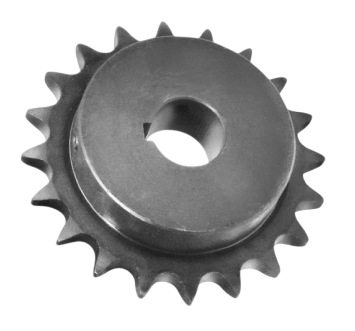
Industrial Sprocket

What Is an Industrial Sprocket?

An industrial sprocket is a wheel with evenly spaced teeth cut around its rim, sized and shaped to engage the rollers of a roller chain. It sits on a shaft and, as that shaft turns, the teeth pick up and release the chain in sequence, moving the chain, and whatever it's connected to, along with it.

A few terms come up constantly when you're talking sprockets, so it's worth defining them plainly:

01
Teeth

the individual points around the rim that engage the chain rollers.

02
Pitch

the distance between corresponding points on adjacent teeth, which has to match the pitch of the chain it's running.

03
Pitch circle

the imaginary circle that passes through the center of each chain roller when the chain is wrapped around the sprocket.

04
Bore

the hole through the center of the sprocket where the shaft passes through.

05
Hub

the raised section around the bore that gives the sprocket extra material to mount securely on the shaft.

06
Keyway

the machined slot in the bore that holds a key, which locks the sprocket to the shaft so it can't spin independently.

The basic relationship is simple. A chain wraps around two or more sprockets. One is the driver, turned by a motor or a shaft. The others are driven, picking up motion from the chain. Torque and rotation pass from the driving shaft through the chain to whatever the driven sprocket is attached to.

Work Support

How Does a Sprocket Work?

The mechanism is straightforward once you break it into steps:

That's the whole chain-and-sprocket mechanism. It looks basic because it is, and that's exactly why it's held up in heavy industrial equipment for well over a century. Positive tooth engagement means there's no slip the way there can be with a belt and pulley, which is one reason chain drives get chosen for high-load, high-torque jobs where losing even a small percentage of transmitted power isn't acceptable.

Sprockets Configurations

Simplex, Duplex and Triplex Sprockets

This is probably the single most important distinction on this page, because it's the first question we ask when a customer sends an enquiry.

The difference comes down to how many strands of chain the sprocket is built to run.

Simplex sprocket - single strand chain sprocket
Simplex Sprockets

A simplex sprocket runs a single strand of chain. It's the standard configuration for general industrial chain drives where one strand comfortably handles the load. Most conveyor and light-to-medium machinery drives use simplex sprockets, and they're the most compact and cost-effective option when a single chain strand is enough.

Duplex sprocket - two strand chain sprocket
Duplex Sprockets

A duplex sprocket runs two parallel strands of chain side by side on the same wheel. Running two strands increases the load the drive can carry, which is why duplex sprockets show up in heavier-duty applications where a single strand would be pushed past its comfortable working range.

Triplex sprocket - three strand chain sprocket
Triplex Sprockets

A triplex sprocket runs three strands. These go into demanding, high-load power transmission systems, typically where equipment size or duty cycle rules out a simplex or duplex arrangement.

Here's a quick reference for the three:

Type Chain Strands Typical Use
Simplex 1 Standard chain drives, general industrial machinery
Duplex 2 Higher-load chain drives, heavier equipment
Triplex 3 Heavy-duty and multi-strand drive systems

One thing worth saying plainly: triplex isn't automatically “better” than simplex. The right choice comes down to the chain you're running, the load, the speed and how the rest of the drive system is designed. A triplex sprocket on an undersized shaft or an oversized simplex chain won't solve anything. Send us your chain specification and load details and we'll tell you what actually fits.

Industrial Sprockets

Types of Industrial Sprockets

Simplex, duplex and triplex describe strand count. Separately, sprockets also get grouped by the kind of duty they're built for.

Roller Chain Sprockets

The most common category, built to engage standard roller chains across a wide range of pitches and standards. These cover the majority of general power transmission applications.

Conveyor Sprockets

Built for conveyor and material handling systems, where sprockets often run continuously for long stretches and need to hold tooth geometry accurately over extended duty cycles.

Taper-Lock Sprockets

Sprockets built with a taper-lock bushing interface rather than a straight bore and keyway. This mounting style makes installation and removal faster and gives a more secure grip on the shaft, similar in principle to how our Ani-Flex Taper-Lock V-Pulley mounts.

Custom Sprockets

Built entirely to a customer's drawing, sample or stated application. This is where a large share of our sprocket work actually happens. If you have a machine running an obsolete or hard-to-source sprocket, we can measure it, engineer a matching drawing, and manufacture a replacement.

Industrial Sprocket Specifications

  • Getting a sprocket order right depends on nailing down a specific set of parameters up front. Here's what we need from you and why each one matters:
Parameter What It Covers
Chain Standard The chain standard you're running (ANSI, BS, ISO or DIN, where applicable)
Chain Pitch The distance between corresponding chain pin centers, which the sprocket teeth must match exactly
Number of Teeth Sets the sprocket's geometry and its speed relationship with the chain and the other sprocket in the drive
Bore The shaft-mounting diameter through the center of the sprocket
Keyway The machined slot that lets the sprocket transmit torque to the shaft without slipping
Hub The mounting structure around the bore
Tooth Profile Has to correctly engage the chain you've specified
Strand Simplex, Duplex or Triplex
Material Selected against the load and environment the sprocket will run in
Heat Treatment Applied where wear resistance and durability requirements call for it
Surface Finish Set according to the manufacturing process and application
  • We don't publish fixed size ranges on this page, because what we can manufacture on a given order depends on the specific chain, load and drawing involved. Tell us the parameters above and we'll confirm what we can build.
Material Selection

Materials Used for Industrial Sprockets

Material selection isn't about picking the “strongest” option by default. It comes down to the load the sprocket carries, the torque and speed of the drive, how much wear and shock loading it's exposed to, the operating environment, and how long you need it to last in service.

We work with a range of steel grades depending on those factors:

Material Typical Reason for Selection
Mild Steel General-purpose applications with moderate load requirements
EN8 General engineering use where higher strength than mild steel is needed
EN9 Applications calling for greater strength and wear resistance
EN19 Higher-load, high-strength applications
EN24 Demanding mechanical applications with tougher duty cycles

We won't tell you a particular grade is right for your load without seeing the actual application. If you can share the operating conditions, torque and duty cycle, our engineering team can recommend a grade with a reason behind it, not just a guess.

Wear Resistance

Sprocket Tooth Hardening and Heat Treatment

Sprocket teeth take repeated contact stress every time the chain rollers engage them, and over enough cycles that contact wears the tooth profile down. Once the profile wears past a certain point, engagement gets sloppy, noise increases, and the chain starts to wear faster too.

Heat treatment addresses this by hardening the tooth surface so it resists wear, while keeping the core of the sprocket tough enough to absorb shock loads without cracking. That balance between surface hardness and core toughness is the whole point of the process. Where an application's duty cycle and load call for it, we apply heat treatment to the tooth profile to extend service life. Tell us your operating conditions and we'll confirm whether heat treatment makes sense for your sprocket.

From Drawing to Dispatch

Sprocket Manufacturing Process

Here's roughly how a sprocket order moves through our shop, from the first drawing to the finished part.

01
Customer Drawing or Sample Review

We start by reviewing your dimensions, chain specification and mounting requirements, whether that's a formal drawing, a physical sample, or a description of the application.

02
Material Selection

Based on the load and environment you've described, we select a material that fits the mechanical properties the job needs.

03
Blank Preparation

The raw material is prepared into a blank sized for the sprocket's outer diameter and thickness.

04
Precision Machining

The tooth profile, bore, hub and keyway are machined to the specified dimensions and tolerances.

05
Heat Treatment

Applied where the application calls for extra wear resistance, following the material selection made earlier.

06
Quality Inspection

Each sprocket goes through dimensional checks, tooth profile verification, and bore and keyway checks, along with material and heat treatment verification where applicable.

07
Final Finishing & Dispatch

The finished sprocket is cleaned, finished and prepared for dispatch.

This process runs on the same quality framework we apply across our coupling and pulley manufacturing, including our multi-level material evaluation and NABL-certified lab testing. You can read more about our full quality process on our About page.

Made to Order

Custom Industrial Sprockets as per Drawing or Sample

This is one of the areas where we spend the most time with customers, because a huge amount of the sprocket demand out there isn't for a catalogue part. It's for a replacement.

We manufacture custom sprockets for:

  • Replacement of obsolete or discontinued sprockets no longer available from the original supplier
  • Imported sprockets that are expensive or slow to re-import
  • Non-standard tooth counts, bores or hub dimensions that don't match a stock part
  • Multi-strand configurations built to a specific chain arrangement
  • Sprockets built entirely from a sample, with no drawing available

For the best turnaround, a drawing should ideally include the chain standard, tooth count, strand configuration, bore, hub dimensions, keyway, material, heat treatment requirement, tolerances and quantity. If you don't have a formal drawing, send us the physical sample or a description of the application and our team will work from there.

Send Your Sprocket Drawing Request a Custom Sprocket Quote
Where They're Used

Industrial Sprocket Applications

Chain and sprocket drives show up wherever equipment needs reliable power transmission with positive engagement and no slip. Based on the industries we already serve for couplings and pulleys, sprocket demand from our customers tends to fall into the same sectors.

Steel Industry

Material handling lines, conveyors and processing equipment running continuous, heavy-load operations.

Cement Industry

Conveyors, material handling systems, and crushers and feeders where chain drives are part of the material flow.

Mining & Mineral Processing

Conveyors and heavy-duty material handling equipment operating in dusty, high-load conditions.

Power Plants

Chain-driven auxiliary and material handling systems supporting continuous plant operation.

Material Handling

Conveyors, chain-driven systems and general industrial handling equipment across sectors.

If your industry isn't listed here, get in touch anyway. We'll tell you honestly whether it's something we can build for.

Selection Procedure

How to Select the Right Industrial Sprocket

Selecting a sprocket properly means working from the chain and the application, not from the outside diameter of whatever sprocket happens to be sitting on the machine right now. Here's the order we work through with customers.

01
Identify the chain

Confirm the chain standard — ANSI, BS, ISO or DIN, whichever applies to your equipment.

02
Confirm the chain pitch

The sprocket teeth have to match the chain's pitch exactly, or engagement won't be correct.

03
Determine strand count

Simplex, duplex or triplex, based on the load the drive needs to carry.

04
Select the tooth count

Depends on the drive ratio you need, the operating speed, and application requirements.

05
Confirm shaft & bore details

Bore diameter, keyway dimensions and hub sizing all need to match the shaft.

06
Consider load & speed

Torque, RPM and the actual operating conditions the sprocket will see in service.

07
Select the material

Based on the load and the environment, as covered above.

08
Consider tooth hardening

Where wear conditions and duty cycle justify it.

Skip step one and start from an existing part's outside diameter, and you can end up with a sprocket that looks right but doesn't actually match the chain or the load. Working from the chain and application first avoids that.

Industrial Sprocket vs Gear

Industrial Sprocket vs Gear

People mix these up constantly, so it's worth spelling out the difference clearly.

Sprocket Gear
Engages a chain Meshes directly with another gear
Power transmission runs through the chain Power transmission runs gear-to-gear
Can transmit power between shafts set further apart Generally needs the shafts positioned close together
Common in conveyors and chain drive systems Common in gearboxes and speed reducers

If your equipment needs to move power between shafts that aren't right next to each other, a chain and sprocket setup is usually the more practical answer than trying to force a gear train to do the same job.

Sprocket vs Pulley

  • Since AniGears already manufactures the Ani-Flex Taper-Lock V-Pulley, this comparison comes up often with customers deciding between a chain drive and a belt drive for the same section of a machine.
Sprocket Pulley
Runs on a chain Runs on a belt
Positive engagement with the chain, no slip Belt-based transmission, which can slip under load
Tooth profile matched to the chain Groove profile matched to the belt
Common in chain drive systems Common in belt drive systems

Neither is universally better. Chain and sprocket setups give you positive engagement and handle higher torque without slipping, but they need lubrication and run louder. Belt and pulley setups run quieter and need less maintenance, but they can slip under a sudden load spike. If you're not sure which fits your application, tell us the load, speed and environment and we'll give you a straight answer, even if that answer is our own Taper-Lock V-Pulley rather than a sprocket.

Engineering

Sprocket Replacement And Reverse Engineering

A large share of the sprocket enquiries we get start the same way: a machine has an old, worn or broken sprocket, and the original supplier is gone, too slow, or too expensive to go back to.

Our reverse engineering process for sprocket replacement:

  • We measure the existing sprocket or inspect the sample you send us.
  • We prepare an engineering drawing based on those measurements, including chain standard, tooth count, bore and keyway.
  • We select a matching material based on the original part's likely duty and your stated application.
  • We manufacture the replacement to the drawing.
  • We inspect the finished part against the original dimensions before dispatch.

This is the same reverse engineering capability we already apply to coupling replacements, so if you've worked with us on a coupling before, the process for a sprocket will feel familiar.

Quotes

What Information Do We Need for a Sprocket Quote?

Sending us a complete set of details up front gets you a faster, more accurate quote. Here's what to include:

  • Chain number or standard
  • Simplex, duplex or triplex
  • Number of teeth
  • Pitch
  • Bore diameter
  • Keyway dimensions
  • Hub dimensions
  • Overall sprocket dimensions
  • Material preference, if you have one
  • Heat treatment requirement, if known
  • Quantity
  • Drawing, sample or photo of the existing part
  • Application and industry
  • RPM and load, if available

If you're missing some of these, send what you have. Our team can often fill gaps from a sample or a description of the equipment.

Why Choose AniGears?

Why Choose AniGears for Industrial Sprockets?

We're not starting a sprocket line from scratch. It's an extension of manufacturing capability we've already built over 15+ years of making couplings and pulleys for steel, cement, power and mining customers across India.

A few things that carry over directly:

ISO 9001:2015 certified manufacturing, with a documented quality process from raw material to finished part.

NABL-certified lab testing, so material and quality claims aren't just marketing copy, they're verified.

Engineering-led manufacturing, not a catalogue reseller operation. We work from your drawing or application, not a fixed size chart.

Reverse engineering and site inspection, already part of how we handle coupling replacements, applied the same way to sprockets.

Manufacturing facilities across our Ahmedabad and Kolkata network, giving us the shop floor capacity to handle both standard runs and one-off custom parts.

Quality checks at every stage, including ultrasonic testing for internal flaws and dynamic balancing where the application calls for it.

If you'd like the fuller picture of our certifications and manufacturing process, our About page covers it in detail, and our full product catalogue is available as a download if you want specifications for our coupling and pulley range alongside sprockets.

FAQ's

Frequently Asked Questions

An industrial sprocket is a toothed wheel that engages a roller chain to transmit rotary motion and torque between shafts, commonly used in conveyors, chain drives and material handling equipment.

A sprocket transmits power through a chain, while a gear meshes directly with another gear. Sprockets can transmit power over greater distances between shafts, while gears typically require the shafts to sit close together.

A simplex sprocket runs a single strand of chain, suited to standard industrial chain drives with moderate load requirements.

A duplex sprocket runs two parallel chain strands, used where a single strand isn't enough to carry the load.

A triplex sprocket runs three chain strands and is used in heavy-duty, high-load power transmission systems.

Start from your chain standard and pitch, then confirm strand count, tooth count, bore and keyway dimensions, and select material and heat treatment based on load and operating conditions.

Yes. We manufacture custom sprockets from customer drawings, including specific tooth counts, bore sizes, hub dimensions and material requirements.

Yes. If you don't have a drawing, we can measure a physical sample and prepare an engineering drawing to manufacture a matching or replacement sprocket.

Depending on the application, we manufacture sprockets in mild steel, EN8, EN9, EN19 and EN24, selected against load, wear and operating environment.

Yes, where the application's wear conditions and duty cycle call for it, we apply heat treatment to the tooth profile to extend service life.

Chain standard, strand configuration, tooth count, bore, keyway, hub dimensions, material, heat treatment requirement, tolerances and quantity, along with a drawing, sample or photo where available.

Steel, cement, power generation, mining and mineral processing, and material handling are the main sectors we supply sprockets into, the same industries we already serve with our coupling and pulley range.

Ready to Order or Replace a Sprocket?

Have a chain specification, a worn sprocket that needs replacing, or a new drive to design from scratch? Send us your drawing, sample or application details and we'll get back to you with what we can build.

Download Catalogue

Engineering Solutions Catalogue

Download our comprehensive catalogue to explore Anigears’ full range of engineering products, including couplings, pulleys, and conveyor solutions. Get detailed specifications, dimensions, and application information to help you select the right solution for your industrial needs.

Download Catalogue
Scroll Up