Brakedrum Bush Couplings

Our Products

BRAKEDRUM BUSH COUPLINGS

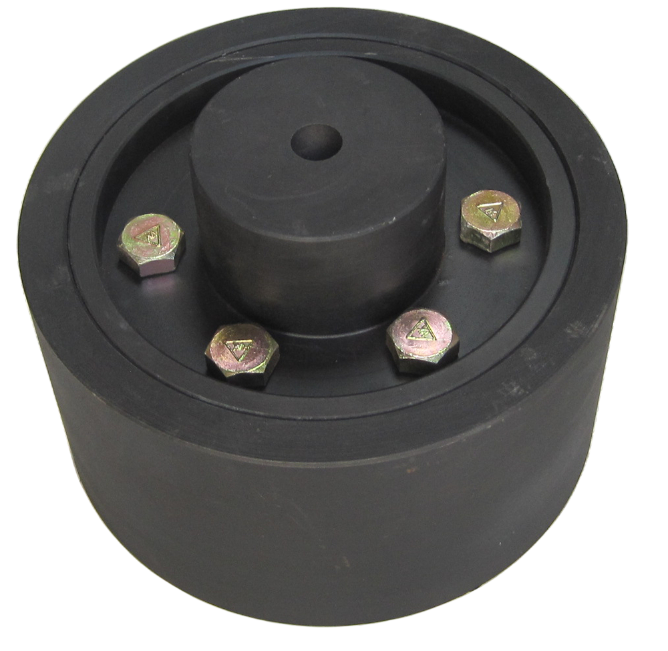
Brake Drum Bush Coupling ABBC Series

AniGears Brake Drum Bush Couplings combine power transmission and braking in a compact design. The flexible rubber bushes effectively absorb shocks, dampen vibrations, and accommodate minor shaft misalignment, ensuring smooth operation and extended equipment life. Designed for heavy-duty industrial applications, these couplings are widely used in cranes, conveyors, hoists, and material handling systems.

Manufactured from high-grade cast iron and precision-machined components, our Brake Drum Bush Couplings offer excellent strength, dimensional accuracy, and resistance to wear. The flexible bush arrangement effectively absorbs shocks, dampens vibrations, and compensates for minor shaft misalignment, ensuring smooth and efficient machine operation with reduced maintenance.

At AniGears Engineering, we offer Brake Drum Bush Couplings in a wide range of sizes and specifications to meet diverse industrial requirements. Every coupling is manufactured under strict quality standards to ensure superior performance, extended service life, and maximum operational efficiency for our customers.

A brake drum bush coupling connects two shafts through flexible pin-and-bush elements, while one half of the coupling body also forms the braking surface for a shoe brake. AniGears manufactures this design as the ABBC series, in eleven sizes from 100 mm to 500 mm drum diameter, with finish bores from 16 mm up to 125 mm. The pin-bush arrangement takes up minor angular and parallel misalignment between the connected shafts, and the same rubber bushes cushion the shock loads that come with frequent starting, stopping and braking.

Because the brake drum is built into the coupling body instead of fitted as a separate wheel on the shaft, the drive line stays shorter and there's one less component to align. That's the main reason cranes, hoists, conveyors and other material handling drives specify this coupling type instead of a standard pin bush coupling plus a separate brake wheel.

Key facts strip

Drum Ø 100–500 mm · Bore 16–125 mm · Torque 15–950 kg.m · Cast Iron Gr.20 / Cast Steel

Request a Quote Download Catalogue
Selection Procedure

Easy Selection Steps

Follow our simple step-by-step process to choose the right product for your application, ensuring optimal performance and reliability.

01
Determine Absorbed Power (kW)
02
Select Service Factor (SF)
03
Compute Design Power
04
Determine Coupling Rating at Operating Speed
05
Select Coupling Size
06
Verify Bore and Misalignment
07
Finalize Coupling Type
Dimension Of Brakedrum Bush Couplings

Detailed Measurements for Brakedrum Bush Couplings

Accurate dimensions provided to ensure proper selection, installation, and reliable performance of your brakedrum bush couplings.

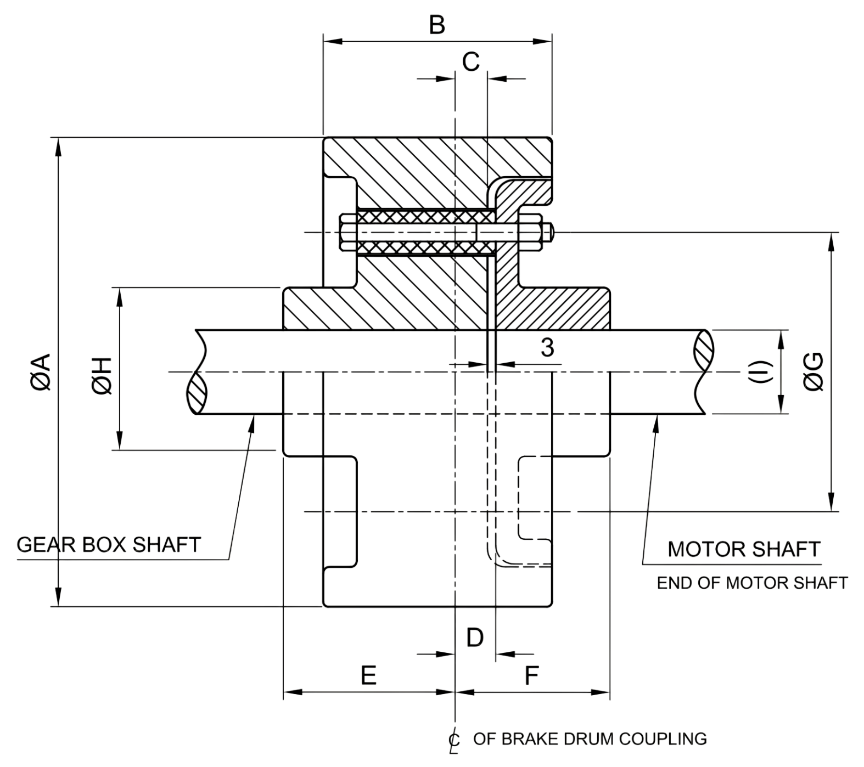
AniGears publishes full dimensional data for every size in the ABBC range something most suppliers in this category won't give you without a formal enquiry. All dimensions are in millimetres, and a certified drawing is available on request once your size is confirmed.

The reference letters follow the labelled drawing supplied with your quotation: ØA is the drum diameter, and B through ØH cover the remaining hub, pin-circle and bore dimensions. We're finalising a fully labelled dimension drawing with engineering and will publish it alongside this table shortly (see Section 7). Torque is shown in kg.m as manufactured, with a N·m conversion added alongside it (1 kg.m ≈ 9.81 N·m) so international buyers can compare directly.

Coupling Size ØA B C D E F ØG ØH Finish Bore Weight (kg) Torque (kg.m) HP/RPM CD² (kgm)
Min Max
ABBC-100 100 65 3 6 32 32 64 45 16 25 4 15 0.016 0.015
ABBC-150 150 80 3 6 42 42 92 65 16 30 10 36 0.028 0.09
ABBC-160 160 90 3 6 42 42 96 70 16 30 12 36 0.030 0.13
ABBC-180 180 95 3 6 47 47 119 75 16 40 16 45 0.050 0.32
ABBC-200 200 102 6 6 57 73 127 84 16 55 18 63 0.050 0.32
ABBC-250 250 127 6 10 82 98 142 100 25 55 28 90 0.125 1.00
ABBC-300 300 152 6 10 89 105 197 127 25 75 61 250 0.350 2.50
ABBC-315 315 160 6 10 95 95 220 130 25 80 65 300 0.420 2.85
ABBC-400 400 180 3 6 147 156 250 150 25 100 130 360 0.500 9.94
ABBC-450 450 184 0 3 133 137 267 155 45 110 172 450 0.630 15.4
ABBC-500 500 210 6 9 144 159 290 200 45 125 250 950 1.380 27.5

Need a coupling for a specific shaft diameter, brake arrangement or application? Contact AniGears with your required dimensions.

Features

Features of Brakedrum Bush Couplings

Product Highlights Details
Flange Material Cast Iron Gr.20 / Cast Steel (As Per Application)
Bush Material High-Quality Natural Rubber / Canvas Reinforced
Fasteners High Tensile / EN-8 Toughened Steel
Finish Black Oxide / Phosphate Coated
Misalignment Accommodates Minor Angular & Parallel Misalignment
Torque Transmission High Torque with Shock Absorption
Maintenance Easy Bush Replacement & Low Maintenance
Bore Options Standard or Custom Bore & Keyway
product-image
Brake Drum Bush Coupling

What Is a Brake Drum Bush Coupling?

A brake drum bush coupling also called a brake drum pin bush coupling, or a brake wheel coupling in older catalogues is a flexible shaft coupling built in two halves. One half is a flange fitted with a ring of steel pins and rubber bushes; the other half carries the same pin-bush arrangement plus a machined outer surface shaped like a drum. That outer surface is what a shoe brake grips.

The flexible part of the design is the same as a standard pin bush coupling: torque passes from one half to the other through the pins and rubber bushes rather than through rigid teeth or a solid disc, so the coupling tolerates small amounts of angular and parallel misalignment and absorbs shock loads that would otherwise travel straight into the gearbox or motor bearings. What sets a brake drum version apart is that AniGears machines the drum surface directly onto one hub, instead of leaving that job to a separate brake wheel bolted onto the shaft. On a crane or hoist drive where a holding brake is almost always needed on the high-speed shaft that saves a component, a set of fasteners and a length of shaft that would otherwise need aligning.

How It's Work

How a Brake Drum Bush Coupling Works

The coupling does two separate jobs, and it helps to think about them separately.

Power transmission runs from the motor shaft into the flange half, through the steel pins, through the rubber bushes, and into the drum half, which carries the torque on to the gearbox input shaft. The bushes are the only flexible element in that path they're what lets the two shaft ends run slightly out of true without transmitting that misalignment as stress and what softens the jolt when power is applied sharply.

Braking is a separate path. A shoe brake commonly an electro-hydraulic thruster brake or an electromagnetic brake, though it isn't limited to either clamps onto the outer surface of the drum half. When the brake is applied, the braking torque is carried by the shaft the drum half sits on; it doesn't pass through the pins and bushes, which is exactly why the drum needs to be part of a rigid hub rather than mounted through a flexible joint.

Whether AniGears fits the drum half on the motor side or the gearbox side depends on the drive layout and where the brake needs to act our engineering team confirms the right arrangement once we know your application. One thing worth being clear about: the coupling itself doesn't stop the load. The brake does that. The coupling's job is to carry torque, absorb shock, and give the brake a true, correctly sized surface to work against.

Material Selection

Construction and Components

An ABBC coupling is built from six main parts, and every one is sized differently across the eleven sizes in the range. The table below sets out what each part does and what AniGears makes it from.

Component Function Material / Detail
Brake drum half Carries the braking surface and connects to one shaft Cast Iron Gr.20 / Cast Steel, selected by application
Flange half Holds the pins and connects to the other shaft Cast Iron Gr.20 / Cast Steel
Pins Carry torque between the two halves High-tensile / EN-8 toughened steel
Rubber bushes Flexible element; absorb shock and take up minor misalignment Natural rubber, canvas-reinforced
Bore and keyway Shaft connection Standard or custom, machined to your shaft
Surface finish Corrosion protection on non-braking surfaces Black oxide / phosphate coating
Get a Quote Download Catalogue
Key Features

Key Features of AniGears ABBC Couplings

01

Integrated brake drum and flexible coupling in a single component, so you don't need a separate brake wheel on the shaft.

02

Eleven standard sizes, ABBC-100 to ABBC-500, covering drum diameters from 100 mm to 500 mm.

03

Body material cast iron Gr.20 or cast steel chosen to suit the application and duty.

04

Pins made from high-tensile EN-8 toughened steel, sized to carry the coupling's full rated torque.

05

Rubber bushes, natural rubber with canvas reinforcement, that can be replaced without disturbing the rest of the drive.

06

Standard or custom bore and keyway, machined to your shaft dimensions.

07

Black oxide / phosphate finish on non-braking surfaces for corrosion resistance.

08

Accommodates minor angular and parallel shaft misalignment without transmitting it as stress.

The basic relationship is simple. A chain wraps around two or more sprockets. One is the driver, turned by a motor or a shaft. The others are driven, picking up motion from the chain. Torque and rotation pass from the driving shaft through the chain to whatever the driven sprocket is attached to.

Specifications

Brake Drum Bush Coupling Specifications

The table below summarizes the ABBC series at a glance. Only fields AniGears can confirm are included where a specification varies by size, see the full dimension table in the next section.

Parameter Value
Product Brake Drum Pin Bush Coupling
Series / Sizes ABBC-100 to ABBC-500 (11 sizes)
Coupling Type Flexible pin-bush coupling with integral brake drum
Drum Diameter 100–500 mm
Finish Bore 16–125 mm (varies by size)
Torque 15–950 kg.m (≈147–9,316 N·m)
Materials Cast Iron Gr.20 / Cast Steel; EN-8 pins; natural rubber / canvas-reinforced bushes
Finish Black oxide / phosphate coated
Weight 4–250 kg
Get a Quote Download Catalogue
Work Process

Which Brakes Does It Work With?

Compatibility comes down to matching the drum, not the brake brand. Any shoe-type brake electro-hydraulic thruster brakes, electromagnetic shoe brakes, or solenoid-operated brakes works with an ABBC coupling as long as the drum diameter and face width match what the brake is designed to clamp onto.

If you're replacing an existing coupling or specifying a new drive, the fastest way to get the right size is to send us the brake model or drum size you're working to, along with the shaft details in the selection checklist below. We'll match the ABBC size to your brake rather than asking you to work it out from the dimension table alone.

Applications

Applications of Brake Drum Bush Coupling

The table below summarizes the ABBC series at a glance. Only fields AniGears can confirm are included where a specification varies by size, see the full dimension table in the next section.

Cranes and hoists need a holding brake on the drive that keeps the load in place the instant power is removed, and the drum gives that brake a dedicated surface without adding a shaft-mounted brake wheel.

Conveyor drives with frequent stop-start duty benefit from the same shock absorption a standard pin bush coupling gives, plus the option of a service brake on the same shaft.

Material handling systems, winches, trolleys, and long-travel and cross-travel drives often have limited space between motor and gearbox, and the integrated drum keeps the drive line shorter than a coupling-plus-separate-drum arrangement.

If your application isn't on this list, get in touch. The pin-bush and drum construction works wherever you need flexible torque transmission and a shoe-brake surface on the same shaft we'll confirm suitability once we know the duty.

Cranes and Hoists

Use in EOT Cranes and Hoists

Overhead crane and hoist drives are where most ABBC couplings end up, and it's worth explaining why the design fits that duty specifically.

A typical hoist or travel drive runs motor → brake drum coupling → gearbox, with the brake applied automatically whenever the motor is de-energised including in a power failure. That's what stops a suspended load from free-falling or a travelling crab from rolling away. Because the brake acts directly on the coupling's drum, the holding torque doesn't depend on anything downstream staying intact.

These drives also see a lot of start-stop cycling. Every lift, lower, and travel movement puts a shock load through the coupling and a clamping cycle through the brake, so the rubber bushes and drum surface both see meaningful wear over the equipment's life which is why routine inspection matters more here than on a constant-running drive. Steel plants and similar environments add dust and heat into that picture, both of which affect how often the bushes and drum need checking.

Selection

How to Select the Right Brake Drum Bush Coupling

Sizing an ABBC coupling starts the same way any pin bush coupling does: take the absorbed power at the shaft, apply a service factor for your duty (crane and hoist duty needs a higher factor than a steady conveyor), and check the resulting design power against the coupling's rating at your operating speed. From there it's a matter of confirming the size fits both shaft bores and, for the brake drum version, that the drum matches your brake.

Rather than working through the full calculation yourself, the fastest route to an accurate quote is to send us the details below and let our engineers do the sizing.

Information Needed Why AniGears Needs It
Motor power (kW) and speed (RPM) Calculates the torque the coupling has to carry
Application and duty (e.g. crane hoist, conveyor, starts per hour) Determines the service factor to apply
Shaft diameters motor side and gearbox side Confirms the bore fits both shafts
Bore and keyway dimensions, or a pilot-bore request Machining to order
Brake type and model, if known Confirms brake compatibility
Drum diameter and width required by the brake The drum has to match the brake shoes
Distance between shaft ends / available space Confirms the coupling fits your drive line
Preferred drum side (motor or gearbox) Affects the arrangement and the braking path
Operating environment (dust, heat, outdoor, corrosive) Affects material and bush selection
Existing coupling make and size, or a drawing, if replacing one Fastest way to match dimensions exactly

Send these details through our enquiry form and we'll come back with a size recommendation and quotation.

Get a Quote Download Catalogue
Difference

Brake Drum Bush Coupling vs Standard Pin Bush Coupling

If you're not sure whether you need the brake drum version at all, the deciding factor is simple: does a shoe brake need to act on this shaft?

A standard pin bush coupling AniGears makes these as the AP Series and the AB Series uses the same flexible pin-and-bush principle, without the machined drum. It's the right choice when braking happens elsewhere in the drive (a brake motor, for example, or a brake on a different shaft) or when the application doesn't need a holding brake at all.

The brake drum version adds a machined drum to one half, which means more material and more weight for the same bore and torque rating that's the trade-off for having a ready-made braking surface built in. If your drive already has braking sorted out somewhere else, a standard AP Series or AB Series pin bush coupling does the same flexible-coupling job for less mass and usually a lower price.

Difference

Brake Drum Bush Coupling vs Brake Drum Gear Coupling

Both couplings do the same two jobs flexible torque transmission plus an integrated brake drum but AniGears' ABGC Brake Drum Gear Coupling gets there differently, and that difference shows up in the numbers below.

Factor ABBC — Brake Drum Bush Coupling ABGC — Brake Drum Gear Coupling
Flexible Element Rubber bushes on steel pins Crowned, hardened gear teeth
Hub / Body Material Cast Iron Gr.20 / Cast Steel Forged / alloy steel hubs (EN-8, EN-9, EN-19, 42CrMo4); cast steel or cast iron sleeve and drum
Lubrication Not required Grease lubricated
Drum Sizes Published 100–500 mm (11 sizes) 150–500 mm
Max Finish Bore Published 125 mm 120 mm
Torque at 250 mm Drum 90 kg.m 100 kg.m or 250 kg.m, depending on bore variant
Torque at 500 mm Drum 950 kg.m 2,000 kg.m
Max Speed Published Not published for this series 2,500–8,000 RPM depending on size
Typical Maintenance Inspect and replace bushes Check grease, seals and tooth wear

The ABBC's rubber bushes cushion shock and absorb misalignment without any lubrication; the ABGC's crowned gear teeth carry more torque in a similar drum size, at the cost of needing grease and periodic seal checks.

In practice, the bush type suits drives where shock damping matters and simple maintenance is a priority most crane and hoist applications fall into this category. The gear type earns its place where you need more torque density from the same drum size, or where a plant already runs a grease-lubrication maintenance schedule and the extra torque capacity is worth it. AniGears manufactures both, so if you're not sure which fits your drive, send us your torque and speed requirement and we'll recommend one.

Get a Quote Download Catalogue
Installation

Installation Considerations

A few checks before fitting go a long way toward getting full service life out of the coupling.

Check the bore and keyway against the shaft before you start — a loose fit works the bushes and pins harder than they're rated for. Clean both shaft ends and the coupling bores before fitting, and don't hammer the hubs on; if the fit is tight, follow a controlled heating method rather than forcing it.

Set the gap between the two halves to the dimension shown in the drawing for your size too tight and the coupling can't take up axial movement; too wide and you lose engagement on the pins. Align both shafts within the coupling's permitted angular and parallel tolerance before final tightening; AniGears confirms the exact tolerance for your size on request.

Before fitting the brake, check the drum for runout a drum that isn't running true wears unevenly against the brake shoes and can cause braking performance to vary. Once the brake is fitted, centre the shoes on the drum face and tighten every fastener to the specification supplied with your coupling. If anything about the fit doesn't look right, stop and check it against AniGears' installation instructions, or call our engineering team before running the drive.

Replacement

Maintenance and Bush Replacement

Most of what shortens a brake drum coupling's life shows up first in the bushes, so that's where a routine inspection should start. Look for cracking, hardening, oil swelling or a bush that's gone missing entirely any of those means it's time to replace, and it's worth replacing the full set together rather than one at a time, since bushes wear at different rates once the load through them is uneven.

Check the pins for wear, bending, or a loose nut while you're in there, and look at the drum surface for scoring, heat discoloration, or uneven contact patterns all signs the brake isn't clamping evenly. Keys and keyways are worth a periodic check too, particularly on drives with frequent start-stop cycling.

Re-check alignment any time the motor or gearbox has been moved, even slight realignment after maintenance work is one of the most common things that gets skipped. There's no fixed interval quoted here, because that depends on your duty cycle and environment; work to whatever schedule your plant maintenance program or crane inspection regime already sets. AniGears can supply replacement bushes and pins against your coupling size.

Problems and Troubleshooting

Common Problems and Troubleshooting

A quick reference for anything that's changed with the coupling in service this doesn't replace a proper inspection, but it's a place to start.

Symptom Possible Cause Recommended Check / Action
Excessive vibration Misalignment; worn or missing bushes; loose hub on shaft; drum runout Stop and check alignment; inspect bushes; check key fit and hub fastening; check drum runout
Knocking or clicking noise Worn bushes allowing pin play; loose pin nuts Inspect and replace bushes as a set; tighten pins to AniGears' specification
Rapid bush wear / cracking Excess misalignment; overload or frequent shock; oil/grease contamination; heat Re-align; review duty vs rating; eliminate oil contact; check environment
Coupling or drum running hot Brake dragging; brake not releasing fully; misalignment Check brake release and shoe clearance; check alignment
Uneven brake shoe contact / scored drum Brake not centred on drum; drum runout; debris Re-centre brake; inspect drum surface; clean; consult AniGears if the drum is damaged
Hub loose on shaft / key damage Incorrect bore fit or keyway; fastener not secured Check bore and key dimensions; replace damaged key; verify fit
Brake slips / load drifts (cranes) Brake adjustment, lining wear, oil on drum Take out of service; qualified inspection of brake and drum

If braking performance is affected on a crane or hoist, take the equipment out of service and have it inspected by qualified personnel before it runs again.

Get a Quote Download Catalogue
Why Choose

Why Choose AniGears

AniGears manufactures the ABBC series we don't trade it in from someone else's catalogue, which means the specification on this page is exactly what we make, and we can adjust bore, keyway or drum-side arrangement to your drawing.

We've been making power transmission products since 2007, first as Transpower and, since 2023, as AniGears. We're ISO 9001:2015 certified, and we manufacture both the bush-type ABBC series and the gear-type ABGC series, so if you're not sure which construction suits your drive, we can recommend one rather than just selling you what we happen to stock. Our couplings run in steel, cement, power, mining, paper and heavy engineering plants, and every size in the ABBC range is built to the dimensions published on this page, not "available on request."

FAQ's

Frequently Asked Questions

It's a flexible pin-bush coupling where one half is also machined as a drum for a shoe brake. Torque passes through steel pins and rubber bushes, which absorb shock and take up minor shaft misalignment, while the drum gives a separately supplied brake a dedicated surface to work against.

Torque runs from the flange half through pins and rubber bushes to the drum half and on to the gearbox. Braking is separate a shoe brake clamps the drum's outer surface, and that braking torque is carried by the shaft the drum sits on, not through the flexible bushes.

They use the same flexible pin-bush principle. The brake drum version adds a machined drum on one half so a shoe brake can act on that shaft. If braking happens elsewhere in the drive, a standard AP Series or AB Series pin bush coupling does the same job with less weight.

Mainly in cranes, hoists, conveyors and material handling systems, and across industries including steel, cement, power, mining, paper and heavy engineering — anywhere a drive needs both flexible torque transmission and a holding or service brake on the same shaft.

Yes — AniGears' ABBC series is commonly specified into EOT crane hoist and travel drives. Because hoist braking is safety-critical, coupling and brake selection should always be verified by the crane designer or a qualified engineer against the applicable crane standard.

The flange and drum halves are cast iron Gr.20 or cast steel, chosen by application. Pins are high-tensile EN-8 toughened steel, and the bushes are natural rubber with canvas reinforcement. Non-braking surfaces get a black oxide or phosphate finish.

The ABBC range runs from ABBC-100 to ABBC-500 11 sizes covering drum diameters from 100 mm to 500 mm and finish bores from 16 mm to 125 mm. Full dimensions for every size are published in the table above.

Yes. AniGears machines each ABBC coupling to a standard or custom bore and keyway. If your shaft size isn't finalised yet, let us know and we can talk through a pilot-bore arrangement.

Motor power and speed, your application and duty cycle, shaft diameters on both sides, brake type and drum size if known, the space available in your drive line, and your operating environment. The full checklist is in the selection section above.

The usual causes are misalignment, overload or repeated shock loading beyond the coupling's rating, oil or grease contamination reaching the rubber, and heat. Regular inspection catches most of these before they lead to a failure.

It depends on your torque and maintenance preferences. The ABBC bush type suits drives where shock damping and simple, lubrication-free maintenance matter most. The ABGC gear type carries more torque in a comparable drum size but needs periodic grease and seal checks. AniGears makes both and can recommend one once we know your requirement.

Ready to Quote

Every ABBC size on this page is built to order, with a bore and keyway machined to your shaft. Send us your motor power, application and shaft details using the checklist above, or get in touch directly, and AniGears will confirm the right size and a quotation.

Download Catalogue

Engineering Solutions Catalogue

Download our comprehensive catalogue to explore Anigears’ full range of engineering products, including couplings, pulleys, and conveyor solutions. Get detailed specifications, dimensions, and application information to help you select the right solution for your industrial needs.

Download Catalogue
Scroll Up