How to Choose the Best Industrial Coupling Manufacturer in India (2026 Guide)
Heavy industries such as steel, cement and power generation face extreme mechanical stress when transmitting power. Poor coupling selection or parts that are of poor quality can cause drivetrain failure, leading to unplanned downtime and higher maintenance costs. Choosing the right industrial coupling manufacturer can affect your plant’s efficiency, safety, and life-of-machine.
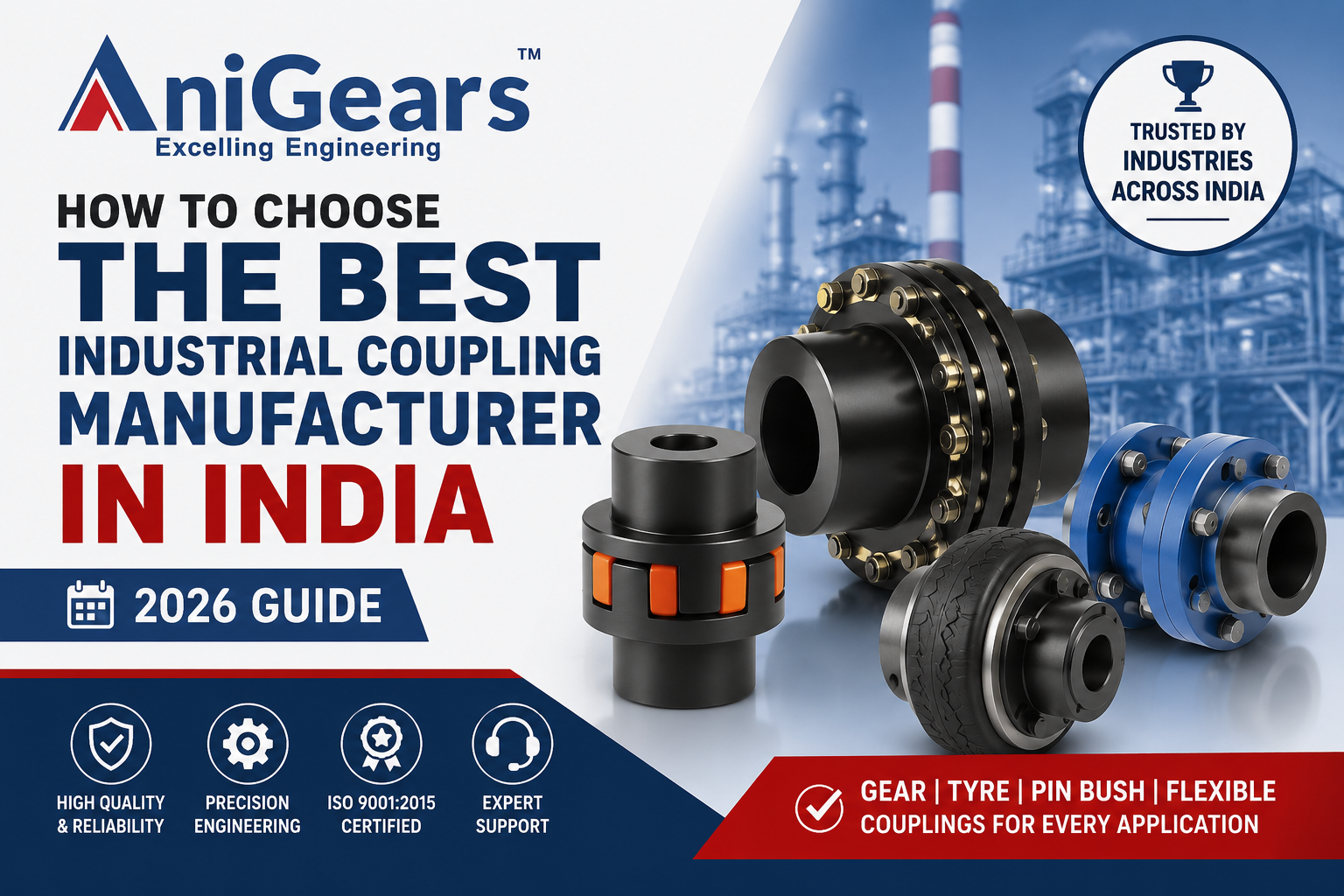
What Makes a Reliable Coupling Manufacturer India?
It is better to look for technical and operational aspects than general claims from the market, as your best chance of finding a good partner is to compare these.
- Manufacturing Experience & Quality Management: A good coupling manufacturer in India should have ISO 9001:2015 certification. They should also have systemic control over material traceability, tolerances for machining and quality of the final product.
- Material Selection & Precision Machining: Select gear coupling suppliers India that use quality forged carbon steel (EN8 or EN9) and/or alloy steel (EN19 or EN24) for higher torque applications. For machining on CNC or VMC machines, choose high-precision tools.
- In-house Testing: Some suppliers perform in-house quality assurance tests such as dynamic balancing, NDT (non-destructive testing) for internal structural flaws, and exact dimensional inspection with calibrated verniers and coordinate measuring machines (CMM).
Types of Industrial Couplings
Gear Couplings
For delivering high power and allowing for slight misalignments in the direction of travel and the angular velocity of the transmission drive shaft. The gear coupling is widely used in rolling mills, cranes, and long-length conveyors in the steel and mining industry. To assure reliable power transmission for heavy-duty applications, it is important to select a trusted gear coupling manufacturer who can produce the right tooth profile that spreads the loads evenly.
Flexible Pin Bush Couplings
These parts provide a comfortable balance between transmission of torque and misalignment. They feature highly elastomeric bushes to absorb shocks and vibrations that are transmitted to the shafts in pumps and compressors. The procurement team should source these from a reputable flexible coupling manufacturer who can guarantee exact bushing tolerances and materials.
Pin Bush Couplings
These traditional mechanical links are used in sugar mills, paper mills, and chemical plants. These links provide a clean transmission of power for medium-to-heavy-duty industrial applications. When choosing an experienced industrial coupling manufacturer for these links, look for one using premium, wear-resistant rubber materials for the bushes, so that the link can handle continuous load.
Tyre Couplings
Top tyre coupling brands are built with a rigid rubber or polyurethane cable that absorbs significant parallel misalignments of up to 4mm and angular misalignments of up to 4°. This protects delicate equipment like gearboxes and motors from shocks during tyre changeovers. When you select the top tyre coupling manufacturers, be sure you will find a high-strength cord that will take torsional winding without premature failure.
Checklist Before Choosing a Supplier
Before sending an RFQ (Request for Quote) or before introducing a new vendor to your organisation, review these technical checklists:
- Manufacturing Capacity: Verify that the facility can handle large-diameter boring, custom keyway slotting, and heavy dynamic balancing in-house.
- Torque Ratings & Engineering Documentation: The supplier must provide comprehensive engineering drawings, 3D CAD models, and calculated torque ratings tailored to your specific application speeds (RPM).
- Lead Times & Parts Inventory: Assess their lead times for custom variants and ensure they maintain a consistent, off-the-shelf inventory of replacement elastomeric bushes, pins, and fasteners.
- Verifiable References: Request case studies or client lists from heavy manufacturing sectors like mining, cement, or power plants to confirm field performance.
Why Engineers Prefer an Indian Gear Coupling Supplier India
India is a progressive country, and since industrial production has become sophisticated, domestic-based suppliers are the preferred choice in international markets. Leading companies offer manufacturing at an extraordinarily high level of precision that meets global standards like AGMA, DIN and ISO at attractive prices.
On top of that, manufacturing in major cities of the country means less travel time compared to importing parts. Most of the leading companies in India are also export-oriented, offering customised finishes, packaging, and documentation for international shipping. Localised technical support enables plant engineers to get immediate on-site or virtual assistance when faced with installation issues.
What to Check in a Gear Coupling Catalogue
An industrial selection manual is an essential part of the engineering reference document. When you view the gear coupling catalogue from a manufacturer, focus on the following specifications:
- Nominal and Maximum Torque Ratings: Must be listed in newton-metres (Nm) with safety factor guidelines.
- Bore Sizes: Minimum and maximum diameters allowable to match your existing motor and driven shafts.
- Material and Lubrication Specifications: Indicate steel grades used and type of grease required for continuous operation.
- Limits of Misalignment: Specified maximum angular, parallel, and axial errors. These are essential in maintaining the correct alignment with your machine.
- Technical Download: If our dimensions are not exactly correct for your machine, then contact us today for a quote on a gear coupling catalogue to suit your needs.